Religions, Beliefs, and the Supernatural in Italy and across Italian Mobilities
April 24–25, 2026
Religious practices, policies, tensions, and conflicts have been a defining feature of the construction of the modern Italian state and its struggle to assert a national identity while in the shadow of the Catholic Church. Various religious communities, such as Jews and Waldensians, and most recently Muslims and Buddhists, have had to contend with the dominance of Catholicism in Italy’s political and cultural spheres. Italy’s colonial and imperial projects in Africa and in the Mediterranean racialized religious differences as aspects of warfare and violent subjugation. Religious beliefs and practices have also shaped the ways in which Italian migrants were seen and understood in new environs, especially in Protestant-dominant countries like the United States. This conference builds on recent scholarship in the field of religious studies and Italian mobility studies to explore new avenues of research.
The full program can be viewed here.
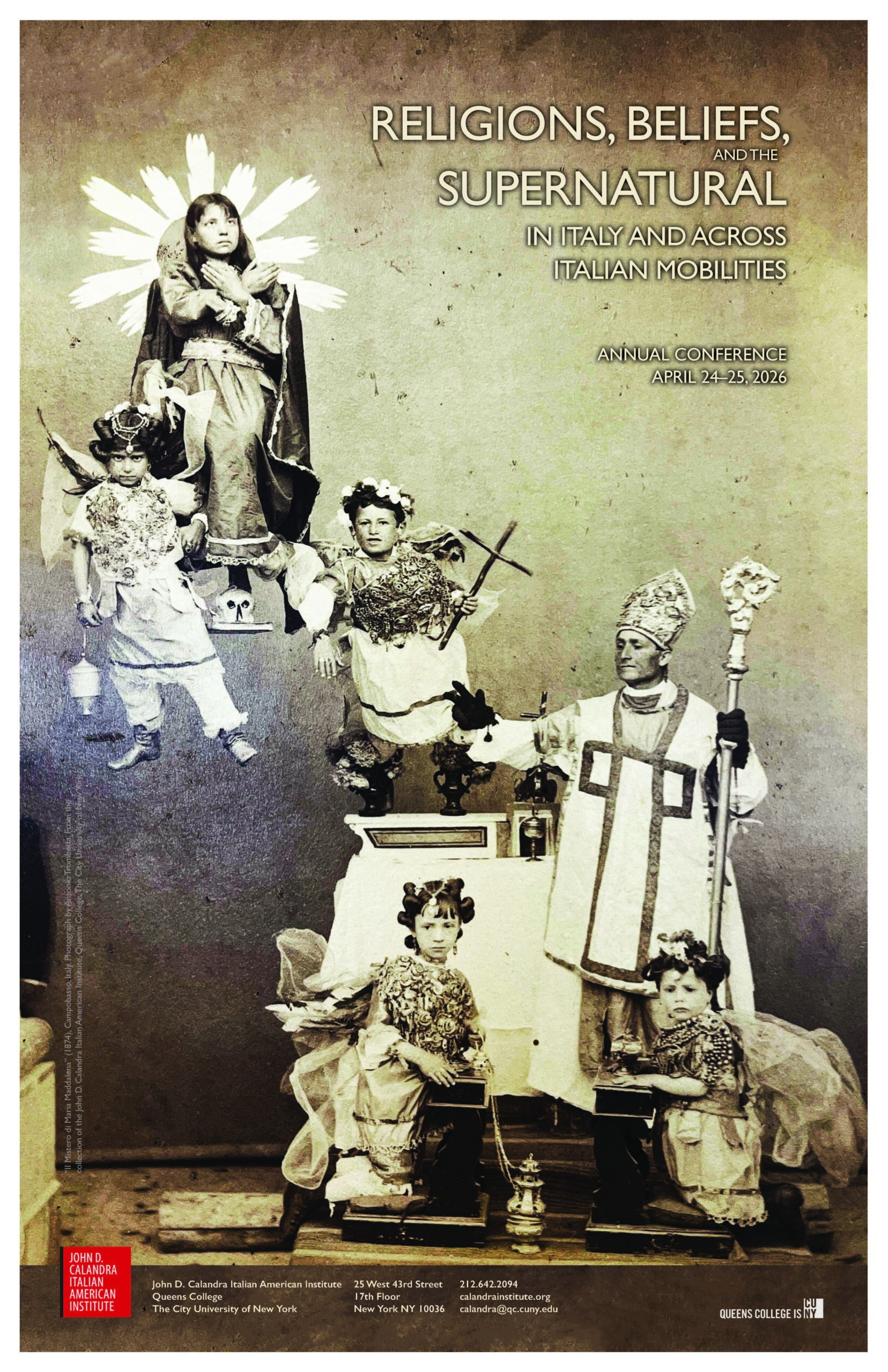
The image on the poster is “Il Mistero di Maria Maddalena” (1874) from Campobasso and taken by the noted Italian photographer Antonio Trombetta.
Religions, Beliefs, and the Supernatural in Italy and across Italian Mobilities
April 24–25, 2026
Religious practices, policies, tensions, and conflicts have been a defining feature of the construction of the modern Italian state and its struggle to assert a national identity while in the shadow of the Catholic Church. Various religious communities, such as Jews and Waldensians, and most recently Muslims and Buddhists, have had to contend with the dominance of Catholicism in Italy’s political and cultural spheres. Italy’s colonial and imperial projects in Africa and in the Mediterranean racialized religious differences as aspects of warfare and violent subjugation. Religious beliefs and practices have also shaped the ways in which Italian migrants were seen and understood in new environs, especially in Protestant-dominant countries like the United States. This conference builds on recent scholarship in the field of religious studies and Italian mobility studies to explore new avenues of research.
The full program can be viewed here.
The image on the poster is “Il Mistero di Maria Maddalena” (1874) from Campobasso and taken by the noted Italian photographer Antonio Trombetta.
 We are happy to share the speaker and panel details for the Calandra Institute’s conference “Religions, Beliefs, and the Supernatural in Italy and across Italian Mobilities,” April 24–25, 2026.
The full program can be viewed here.
The image on the poster is “Il Mistero di Maria Maddalena” (1874) from Campobasso and taken by the noted Italian photographer Antonio Trombetta.
Giovanni Braico, New York University
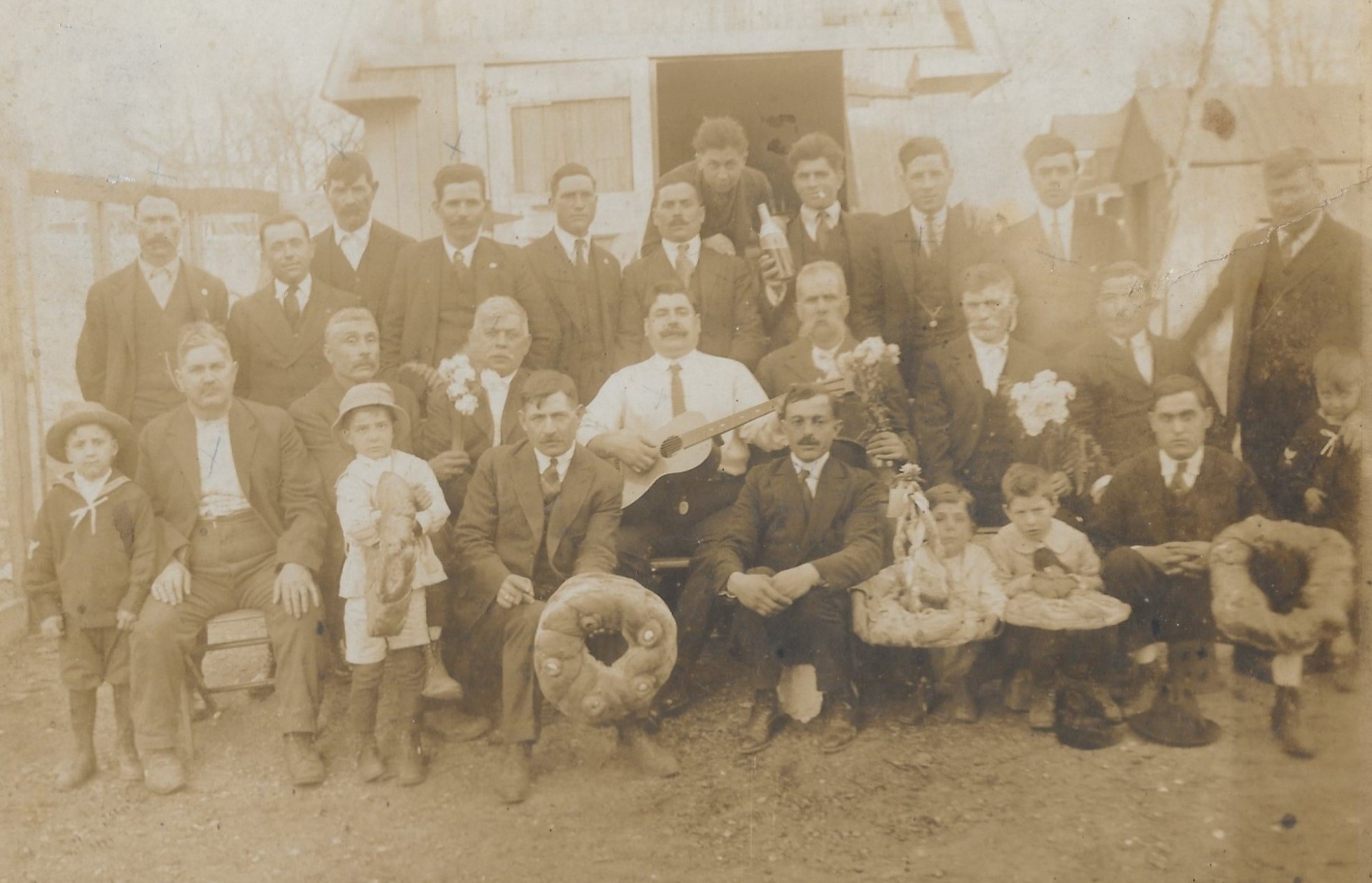
Arbëresh people migrated from various regions of the Balkans, including parts of present-day Albania, the Peloponnese, Epirus, and Attica, to mostly Southern Italy between the fourteenth and eighteenth centuries, and have preserved a distinct language and part of their religious customs since then. This lecture will present initial reflections on the further migration of the Arbëreshë to the United States, a historical phenomenon that has received limited attention in both scholarship and public memory. It will address key issues related to the nature and timing of this migration, the factors contributing to its marginal visibility, and the challenges involved in reconstructing Arbëresh American experiences. The lecture also examines what remains today of Arbëresh American identity, history, and cultural expression, while outlining perspectives and questions that guide ongoing research in this area.