New Exhibition: New Practices in Italian American and Italian Diasporic Contemporary Art March 26–August 14, 2026

(Photo: Vincent Stracquadanio, Crane Your Neck, 2025, courtesy of the artist)

An exhibition of paintings, sculptures, photography, prints, video, and site-specific work by contemporary artists of the Italian diaspora opens March 26, 2026, at the John D. Calandra Italian American Institute’s gallery in Midtown Manhattan. Curated by art historian Rosa Berland, the exhibition brings together work by thirty artists from around the world and presents a sweeping portrait of Italian American and Italian diasporic artistic practice today.

Rooted in traditional and material-based media, the exhibition demonstrates a diverse commitment to craft and technique from the vast geographic extent of the Italian diaspora, with artists hailing from Canada, Australia, Switzerland, Argentina, Italy, and across the United States. New Practices in Italian American and Italian Diasporic Contemporary Art features contributions from acclaimed figures including Paul Corio, Paul Fabozzi, Cianne Fragione, and Bernardo Siciliano, mid-career and emerging artists whose practices are redefining the field. Central to the exhibition are three ambitious site-specific commissions by artists Alessandra Pozzuoli, Maria Moltani, and Stephanie Rebonati-Cannizzo. Together these works anchor the exhibition in the present while incorporating the long history of Italian diasporic artists whose contributions have profoundly shaped the development of American art.

“The exhibition’s theme is a call to home and discovery along the edge: the revealing of artistic transformation of memory, identity, and reclaimed atelier practice as well as craft,” says Berland. “It’s a place of the enigmatic and the liminal: installations that pay homage to the handicraft of women’s invisible labor and voices, the ghostly traces of land as drawings, paintings as aqueous portals, imaginary topographies constructed of textiles, the geometric discipline of abstraction, gestural poetics, the tradition of linear illustration, memories of the botanical and natural world, and studies of the human figure as well as classical sculpture. We also find here the work of teaching artists who continue the centuries-long tradition of foundational studio practice, a way of working that began in sixteenth-century Italy.”

ON VIEW March 26–August 14, 2026
Gallery Hours: Monday–Friday, 9am–5pm
EXHIBITION OPENING March 26, 2026, 6pm

Exhibition: New Practices in Italian American and Italian Diasporic Contemporary Art March 26–August 14, 2026

(Photo above: Vincent Stracquadanio, Crane Your Neck, 2025, courtesy of the artist)

An exhibition of paintings, sculptures, photography, prints, video, and site-specific work by contemporary artists of the Italian diaspora opens March 26, 2026, at the John D. Calandra Italian American Institute’s gallery in Midtown Manhattan. Curated by art historian Rosa Berland, the exhibition brings together work by thirty artists from around the world and presents a sweeping portrait of Italian American and Italian diasporic artistic practice today.

Rooted in traditional and material-based media, the exhibition demonstrates a diverse commitment to craft and technique from the vast geographic extent of the Italian diaspora, with artists hailing from Canada, Australia, Switzerland, Argentina, Italy, and across the United States. New Practices in Italian American and Italian Diasporic Contemporary Art features contributions from acclaimed figures including Paul Corio, Paul Fabozzi, Cianne Fragione, and Bernardo Siciliano, mid-career and emerging artists whose practices are redefining the field. Central to the exhibition are three ambitious site-specific commissions by artists Alessandra Pozzuoli, Maria Moltani, and Stephanie Rebonati-Cannizzo. Together these works anchor the exhibition in the present while incorporating the long history of Italian diasporic artists whose contributions have profoundly shaped the development of American art.

“The exhibition’s theme is a call to home and discovery along the edge: the revealing of artistic transformation of memory, identity, and reclaimed atelier practice as well as craft,” says Berland. “It’s a place of the enigmatic and the liminal: installations that pay homage to the handicraft of women’s invisible labor and voices, the ghostly traces of land as drawings, paintings as aqueous portals, imaginary topographies constructed of textiles, the geometric discipline of abstraction, gestural poetics, the tradition of linear illustration, memories of the botanical and natural world, and studies of the human figure as well as classical sculpture. We also find here the work of teaching artists who continue the centuries-long tradition of foundational studio practice, a way of working that began in sixteenth-century Italy.”

ON VIEW March 26–August 14, 2026
Gallery Hours: Monday–Friday, 9am–5pm
EXHIBITION OPENING March 26, 2026, 6pm

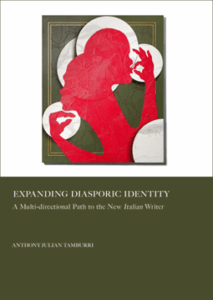
Book Release: Expanding Diasporic Identity by Anthony Julian Tamburri

New book by the Dean of the Institute!

This study examines the changing dynamics of the “Italian” writer and how we, as cultural critics, need to re-think our definitions of the new Italian writer. In so doing, we must also re-consider the notion of the geo-cultural zones that we characterize as “Italian.” Namely, how do we categorize that writer who, having left Italy and now living beyond its geo-cartographic boundaries, writes in Italian? Similarly, who is that other writer who, originating from another country that is both culturally and linguistically different from Italy, writes in Italian? Finally, where within these two groups do we position the writer of Italian origin who also lives in another country and, different from the previous two types of writers, composes his/her work in the language of his/her host country?
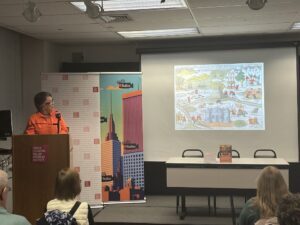
Luisa Del Giudice at Calandra

Thursday, April 11, Luisa Del Giudice, author and independent scholar, presented her new book In Search of Abundance: Mountains of Cheese, Rivers of Wine, and Other Gastronomic Utopias (2023 Bordighera Press), in which she outlines the fascinating and complex journey of ideas about plenty and scarcity in the history of Italian diasporic cultures. The book is available via Bordighera Press.
The Pietro “Pete” Panto Italian Diaspora Labor Dissertation Fellowship

SCOPE OF THE FELLOWSHIP

The John D. Calandra Italian American Institute, a university-wide institute under the aegis of Queens College, The City University of New York, is offering a fellowship for graduate students who are writing their dissertation on any topic involving Italian emigrant and/or Italian ethnic labor and/or working-class life either in the United States or in the wider Italian diaspora. Submissions may come from all relevant fields of study in the social sciences and humanities, including, but not limited to, history, literary studies, film studies, gender studies, and political science.

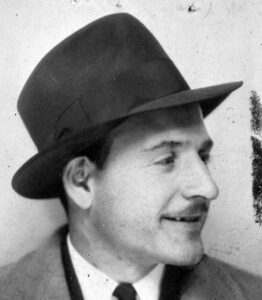
The fellowship is named after dockworker and labor activist Pietro “Pete” Panto (1910–1939), who was murdered for leading rank-and-file stevedores in a struggle for safe and democratic working conditions on the Brooklyn waterfront, which had long been in the grip of mobsters and corrupt elements in the union.

The fellowship will run for six years with one award given each year. The fellowship award is $1,000 US per year, distributed by check or bank transfer after the awardee is announced.

ELIGIBILITY

Graduate students will need to have been registered at their university in the twelve months previous to the application deadline. Recently graduated students are eligible to apply as long as they were registered within the twelve months immediately previous.

Applicants must have passed their qualifying exams, been admitted to candidacy, and have submitted an accepted dissertation proposal. This status must be confirmed in the dissertation director’s letter (see below).

Graduate students who do not win in a given year but continue to work on their dissertation or thesis in the following year are welcome to apply again.

SUBMISSION GUIDELINES

  • Application materials must be in English and submitted in .pdf format. The dissertation itself may be written in any language.
  • Project description: In no more than 750 words (double-spaced, Times New Roman 12-point font with 1-inch margins), provide a title and brief description of the dissertation project, your progress toward its completion, and an explanation of the project’s contribution to the field of diasporic Italian emigrant and/or ethnic labor and/or working-class life.
  • Curriculum vitae: The CV should include your current mailing address, email address, and telephone number and should focus on publications, courses taken and/or taught, professional activities, and awards. Maximum length not to exceed two pages.
  • Unofficial transcripts: Proof of good standing. There is no need for the transcript to be translated into English.
  • Two letters of reference: One letter must come from the dissertation director and explicitly address the relevance of your project to the furthering of Italian diaspora and labor/working-class studies. Both letters must be in English.

Please upload the documents in .pdf format to Submittable: https://bordigherapress.submittable.com/submit/285828/john-d-calandra-italian-american-institute-pietro-pete-panto-italian-diaspora

For any questions about the application process, please write to the John D. Calandra Italian American Institute at the following email: [email protected].

DEADLINE

May 1, 2024. The announcement of this year’s winner will be made on September 2, 2024.